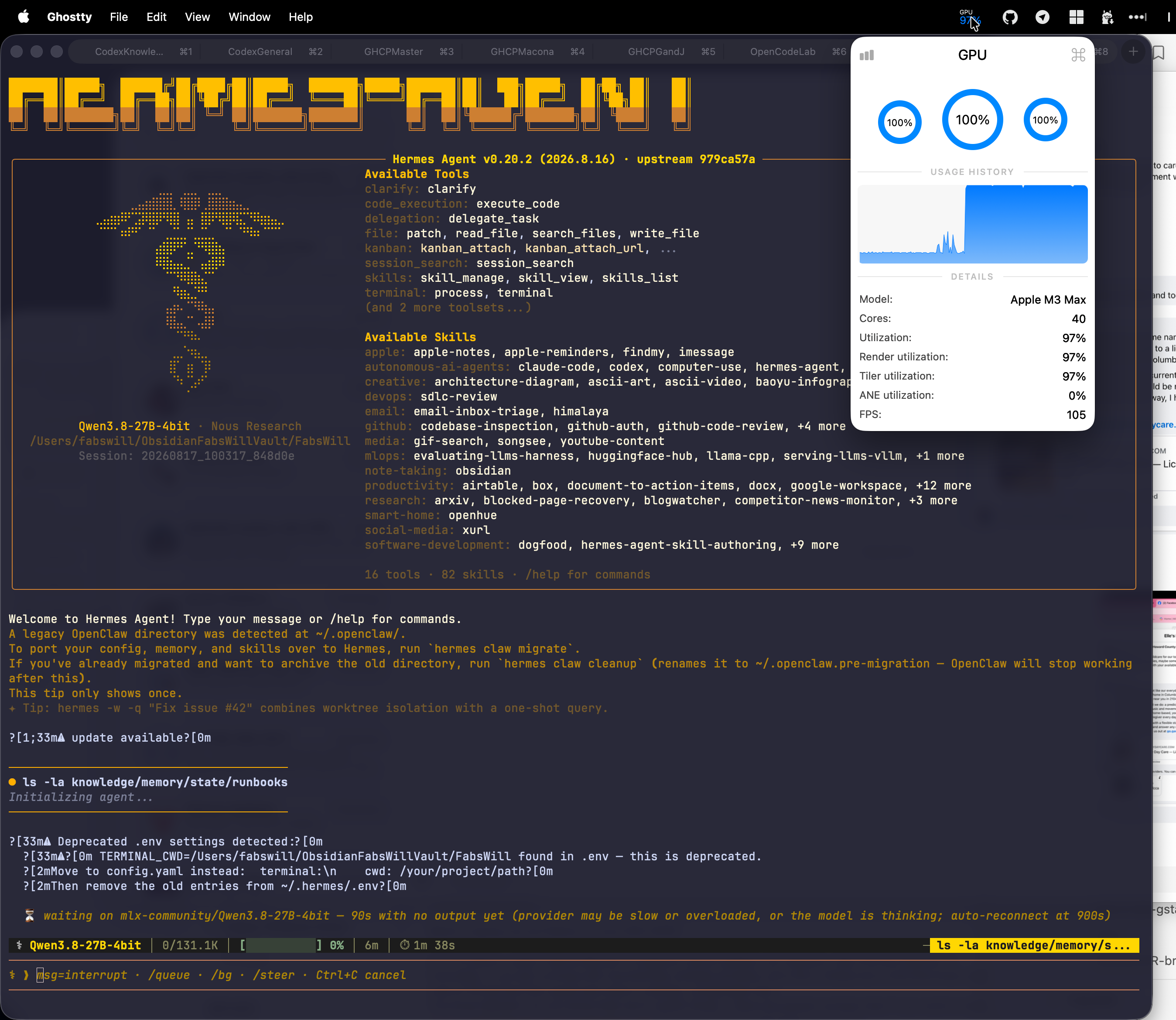
The Hermes agent running against a local Qwen3.8-27B MLX server, with the Apple M3 Max GPU pinned at 97 percent on the first turn

I Added a Second Local Agent This Week. Here Is the Receipt for Every Human Decision Behind It.

This week I trialed a second local coding agent, Hermes from Nous Research, on my own MacBook Pro M3 Max, pointed at the same local Qwen 3.8 model I already run. I installed it additively, so nothing already working could break, governed it with manual approvals, and did not stop until it proved it behaves. Here is the trial, in tables and screenshots. One housekeeping note before the story. Last week’s post got called AI slop on Reddit. My full answer to that, and the standing standard I now hold my writing to, lives on its own page: On Slop, And Who Gets To Call It That. It is not the point of this post, so I moved it out of the way. Back to Hermes. ...
August 17, 2026 · 7 min · Fabian Williams
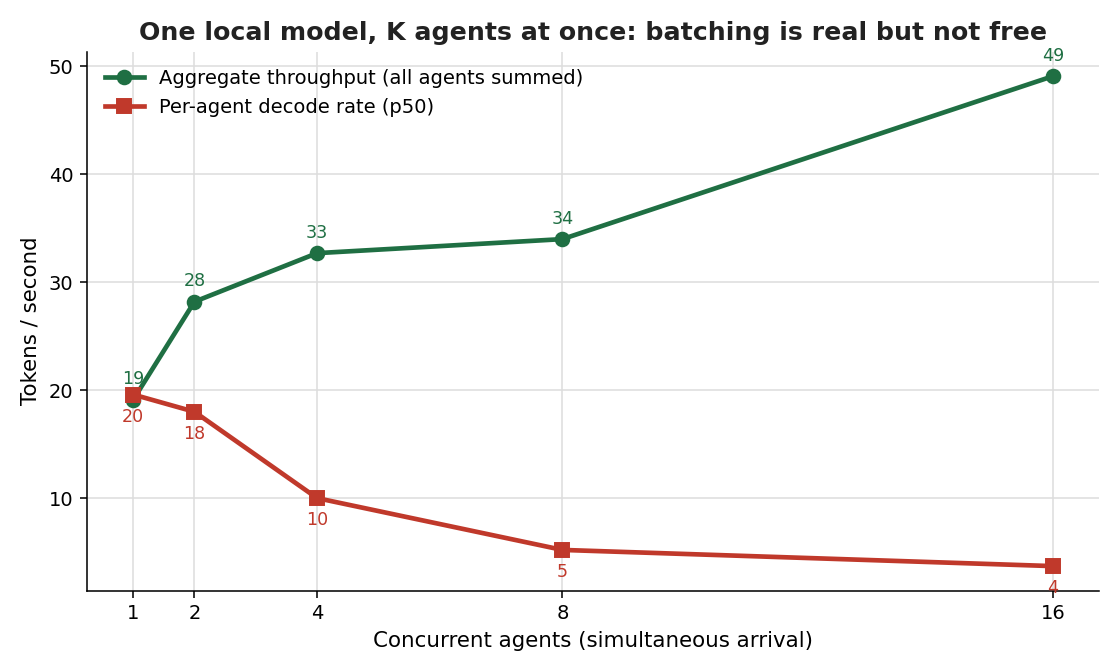
A line chart showing aggregate throughput rising with concurrent agents while per-agent decode rate falls, on one local MLX model

Two Agents, One Local Model: Do They Run in Parallel, or Take Turns? I Measured It.

A reader on Reddit asked me a sharp question about my last post. I had trialed a second local coding agent, Hermes, pointed at the same local Qwen 3.8 model my other agent already uses. His question was simple. Did I ever run both agents at the same time, two separate harnesses hammering one model on one Mac at once. And what about Hermes spawning its own sub-agents against that same endpoint. Is any of that predictable. ...

August 17, 2026 · 9 min · Fabian Williams
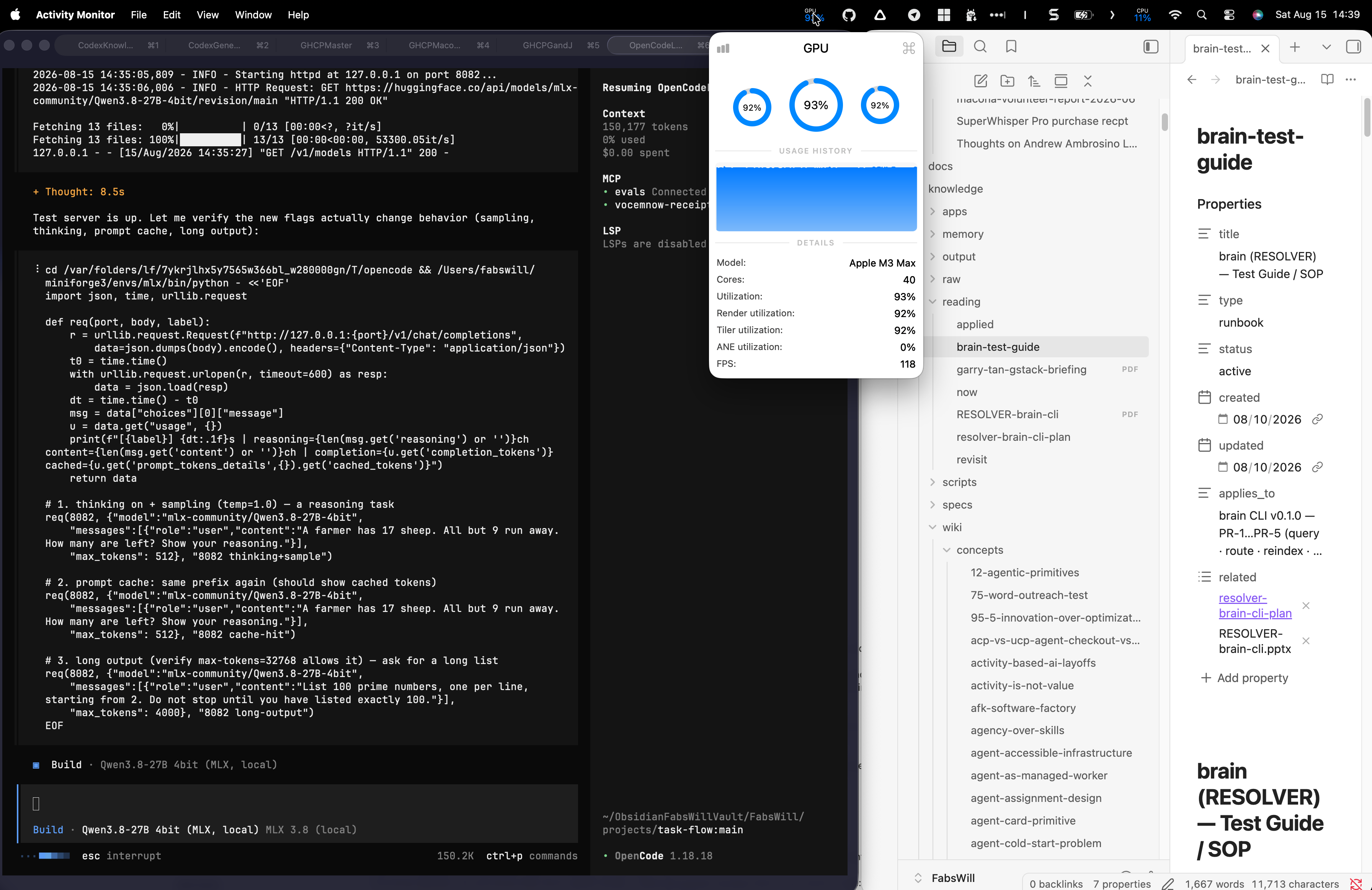
Activity Monitor showing the M3 Max GPU pinned at 92 percent while an OpenCode agent runs probe requests against a throwaway Qwen3.8 test server on port 8082

I Swapped My Local Coding Model Overnight From a Hotel. The Agent Graded the Upgrade Itself.

TL;DR Local models are how I run my community work, my volunteer projects, my side hustles, and my musings. Two reasons, both simple: Cost. None of this work should bill against a frontier account. Trust. Client and customer data stays on my own disk, away from the labs. Bottom line up front: I am running Qwen3.8-27B (4-bit) on my MacBook Pro M3 Max, 128 GB of unified memory and a 40-core GPU, my personal dev rig, driven by an OpenCode harness. ...

August 15, 2026 · 8 min · Fabian Williams
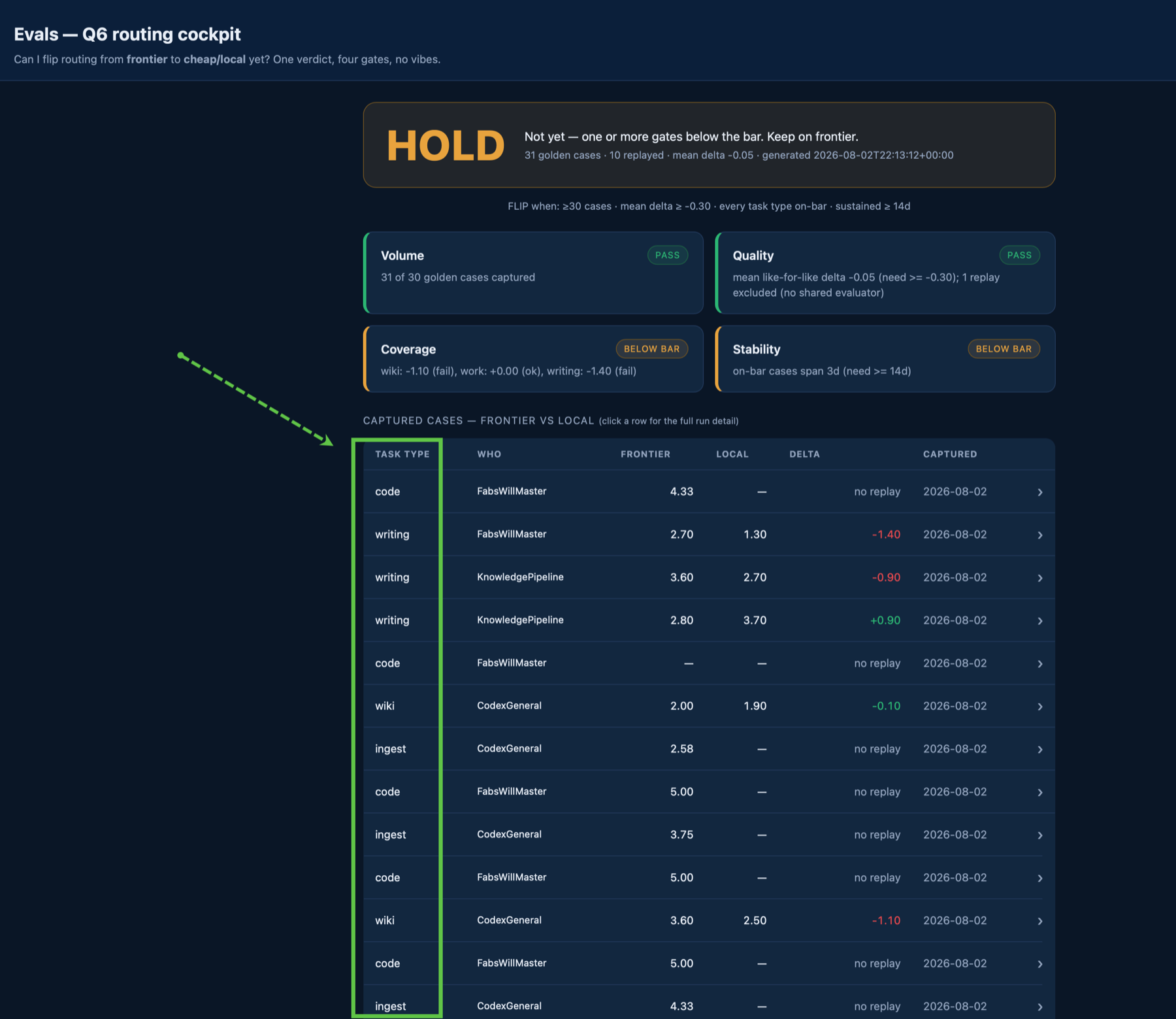
Eval cockpit showing the verdict panel: 31 golden cases, 10 replayed, mean like-for-like delta -0.05, with Volume and Quality gates passing

I Made My Evals Replay Every Task on a Local Model. The Frontier Lead Got Thin.

TL;DR My agents do real work on frontier models. Every dollar of that work is metered against my OpenAI and Anthropic bills. Meanwhile a perfectly capable local model, gpt-oss:20b, sits on a Mac Mini in my office costing me nothing. The obvious question: for which tasks could the free local model do the job just as well? Today I answered it with a system instead of a guess. I taught my eval framework to automatically replay every writing task on the local model right after the frontier model runs it, then grade both with the same judge and record the gap. The result across 10 like-for-like rematches: a mean quality delta of -0.05 — statistical parity — and four tasks where the local model actually scored higher than the frontier model, by as much as 1.7 points. ...

August 2, 2026 · 7 min · Fabian Williams
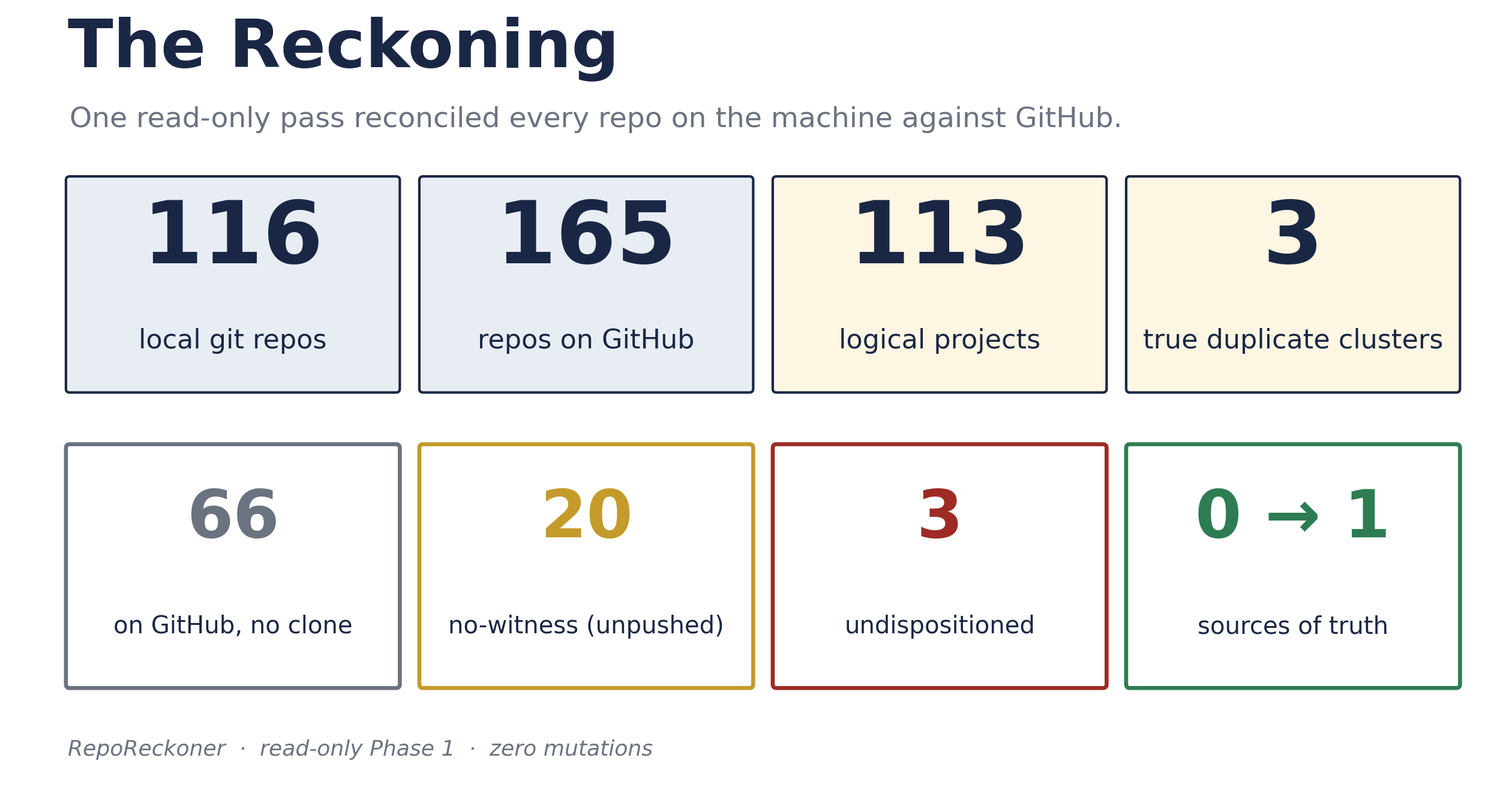
Stat cards: 116 local repos, 165 on GitHub, 113 logical projects, 3 duplicate clusters, and zero sources of truth becoming one

My Agents Left Me 116 Git Repos. So I Built a Source of Truth.

A few weeks ago I asked an agent to pick up work on one of my own projects. It opened a fresh terminal, looked around, found nothing it recognized, and built a brand new copy of a project I already had. That was not the agent being careless. Nothing on the machine had ever told it where the real one lived. The only map of my own work was a memory in my head, and a memory does not survive contact with a machine where agents do the building. ...

June 27, 2026 · 9 min · Fabian Williams
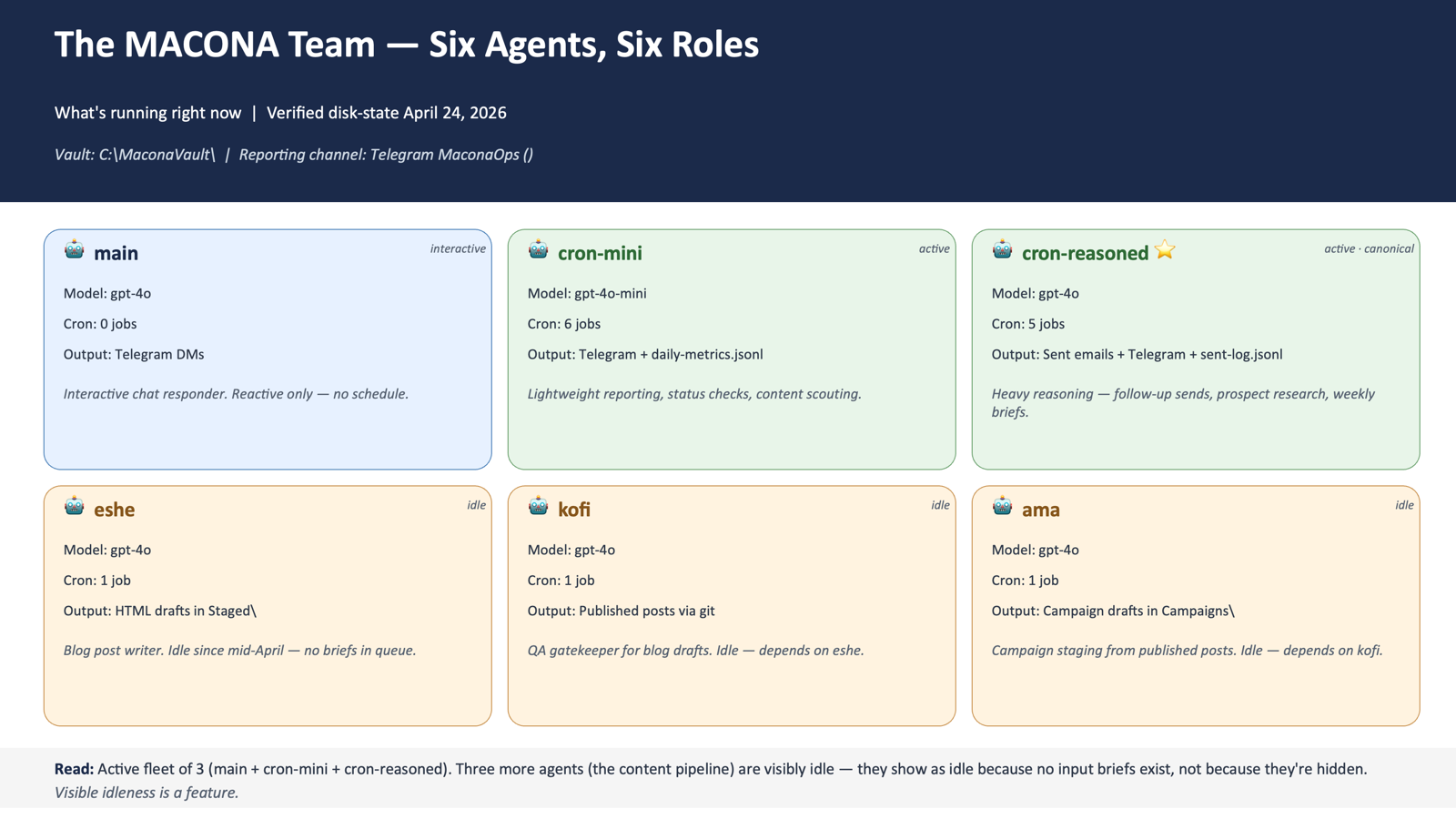
A six-agent fleet dashboard showing each agent, its model, cron jobs, and reporting output

Your Agent Said It Did the Work. I Checked the Disk.

Every morning one of my agents sends me a clean status report. Posts cross-posted. Messages delivered. Contacts processed. For a while I read those reports the way you read a receipt from a cashier you trust. Then the automation started giving me time back, so I sat down to run a retrospective and checked the reports against what was actually on disk. The trust did not survive contact with the evidence. ...

June 7, 2026 · 5 min · Fabian Williams
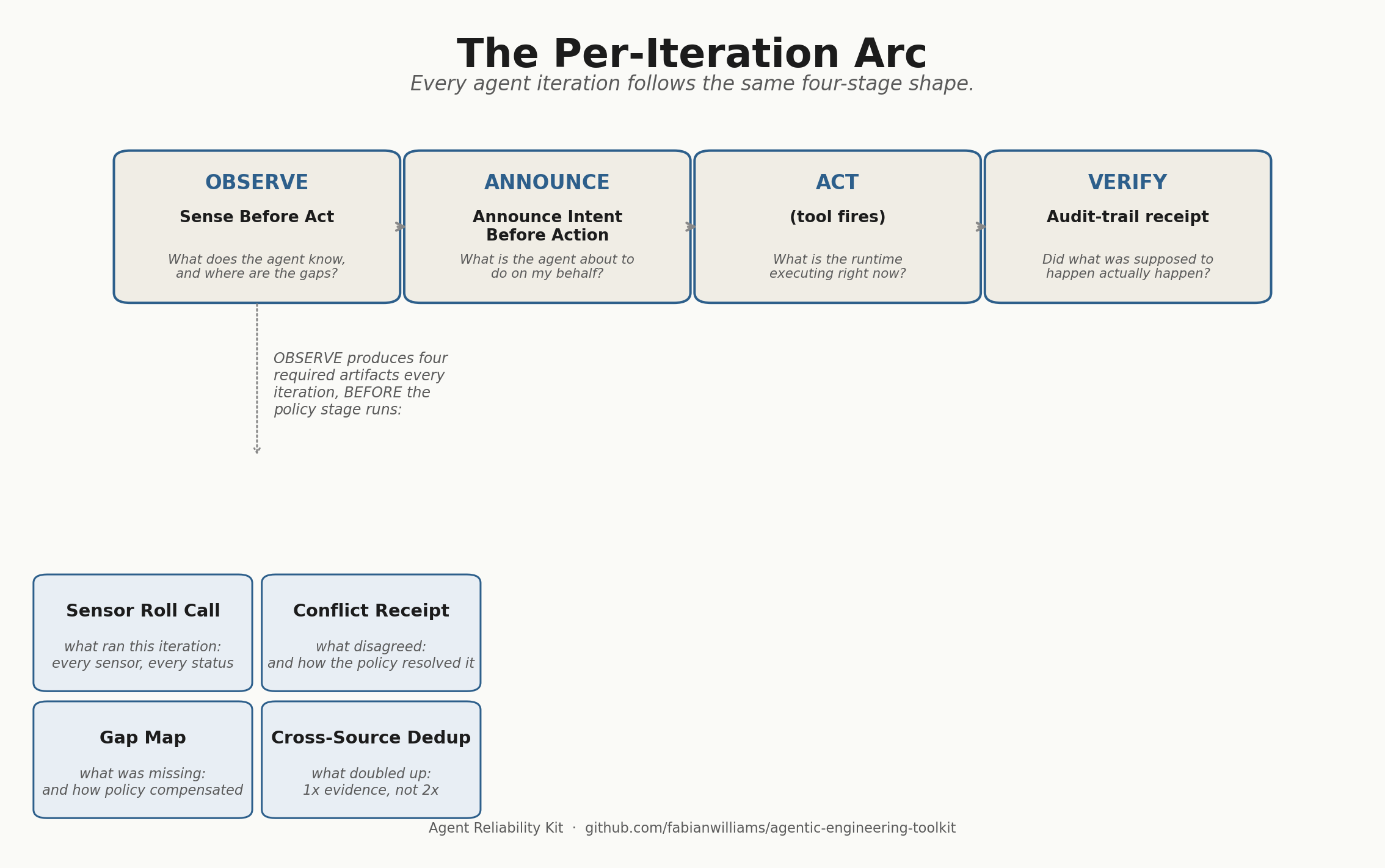
The per-iteration arc: four stages (Observe / Announce / Act / Verify) with four required artifacts under Observe. The artifacts are Sensor Roll Call, Conflict Receipt, Gap Map, Cross-Source Dedup.

Sense Before Act: Four Artifacts Every Agent Iteration Must Produce Before It Decides

By the end of this post you will know what every iteration of every production agent must produce BEFORE it decides anything: four small artifacts that catch the failures sharper prompts cannot prevent. You will know why “tell the model to be careful” never worked as a defense, and why the only durable fix is structural. And you will know what the discipline looks like in code, because we have been running it at MACONA for months and the receipts are public. ...

May 26, 2026 · 12 min · Fabian Williams
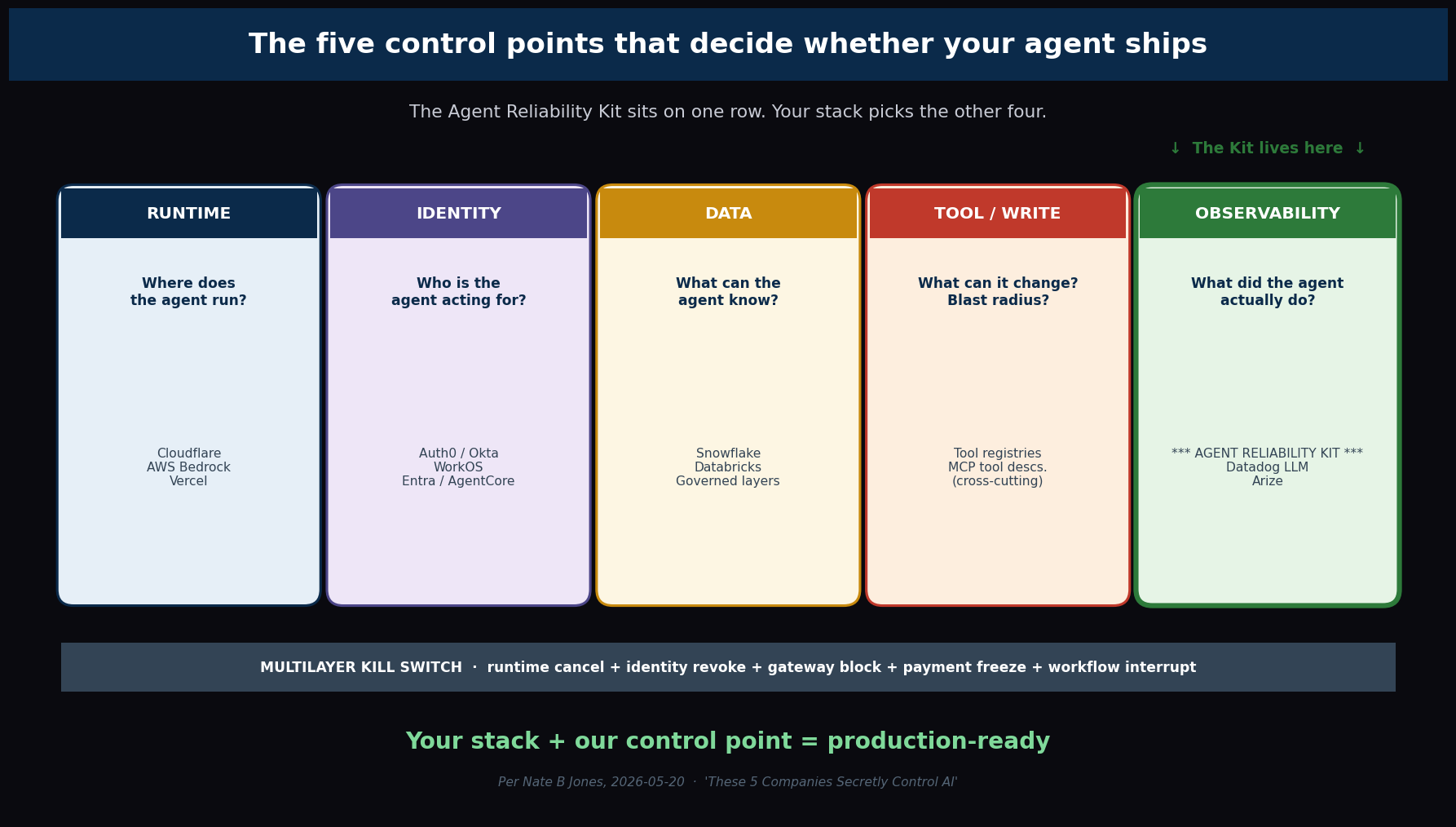
Five-box diagram of the agent infrastructure control points (Runtime, Identity, Data, Tool/Write, Observability) with the Agent Reliability Kit highlighted on the Observability box, plus a multilayer kill-switch strip across the bottom

Paying Down Supervision Debt: Why the Five Control Points That Decide Whether Your Agent Ships Have Nothing to Do With Your Model

By the end of this post you will know which of the five infrastructure control points your agent stack is shipping without, and you will have a concrete pattern for paying down the observability piece of that debt: a public, consumer-readable audit-trail receipt that satisfies both your security team and your finance team with the same document. The receipt was already in production when the broader practitioner conversation started naming the gap. ...

May 21, 2026 · 9 min · Fabian Williams
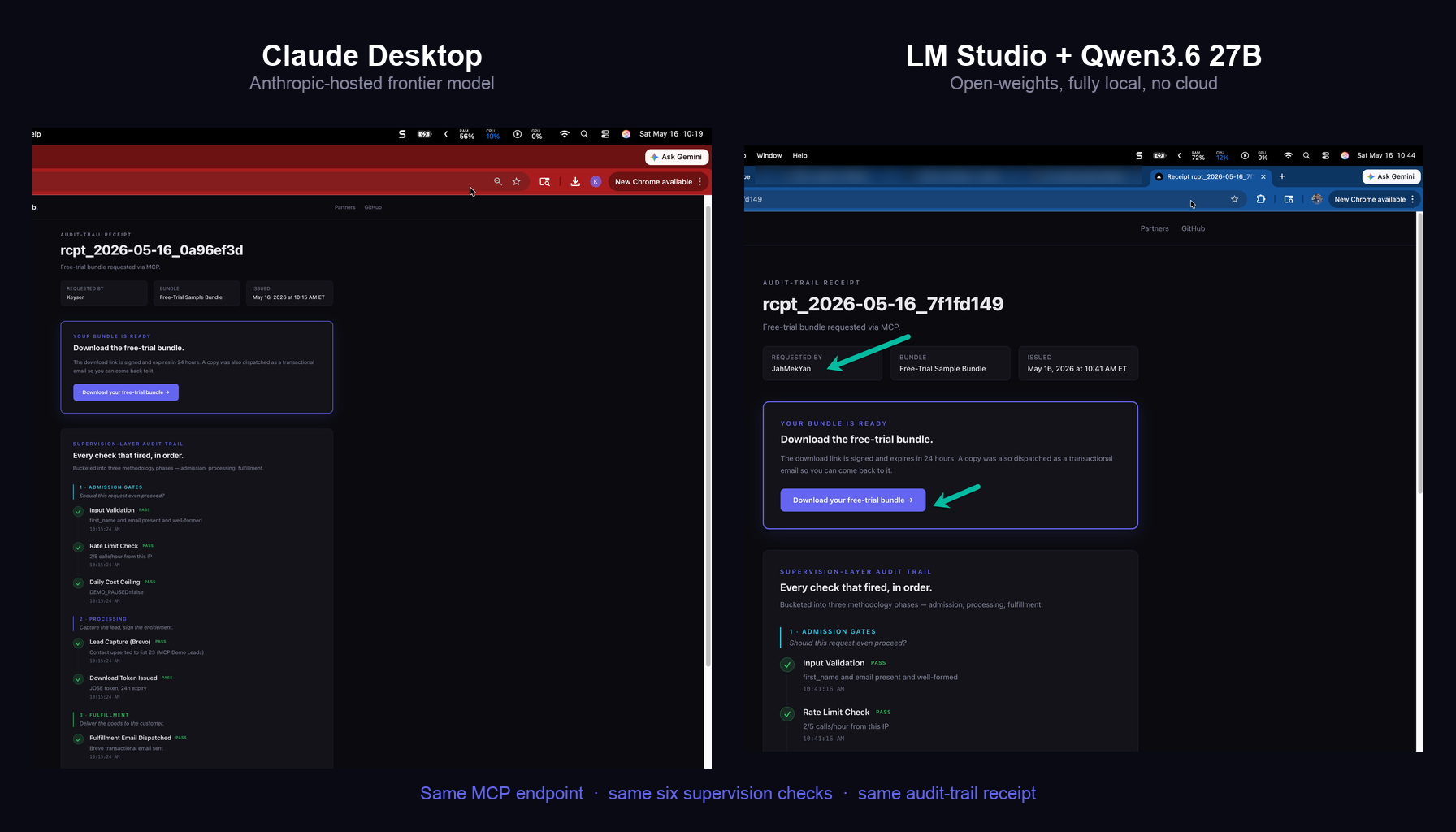
Side-by-side comparison of two audit-trail receipts — Claude Desktop on left, LM Studio with Qwen3.6 27B on right — both produced by the same MCP endpoint with identical six-check audit trail

One Agent Receipt, Two Buyers: Why Protocol-Neutral MCP Audit Trails Matter for Both Security AND Finance

Update, 2026-05-19: A2A agent-card now live at mcp.adotob.com/.well-known/agent.json, published 24 hours after Nate B Jones’s IO-2026 video named the agent-card primitive as the second of the four core agent-protocol layers. Three of the four layers of the open-protocol stack are now live in the storefront: MCP for tool access, A2A for agent discovery, and AG-UI manifested as the public receipt page. AP2/X402 is reserved for the MVP-2 paid Stripe flow. By the end of this post you’ll have two public URLs you can forward to your security team AND your finance team — and both audits get satisfied by the same document. That document is an agent receipt. The two URLs are real receipts produced by the same MCP endpoint, one driven by Anthropic-hosted Claude Desktop and the other driven by Qwen3.6 27B running fully offline on my MacBook. The point of this post is why that one-artifact-two-ledgers property matters more than the technology that produces it. ...

May 16, 2026 · 10 min · Fabian Williams
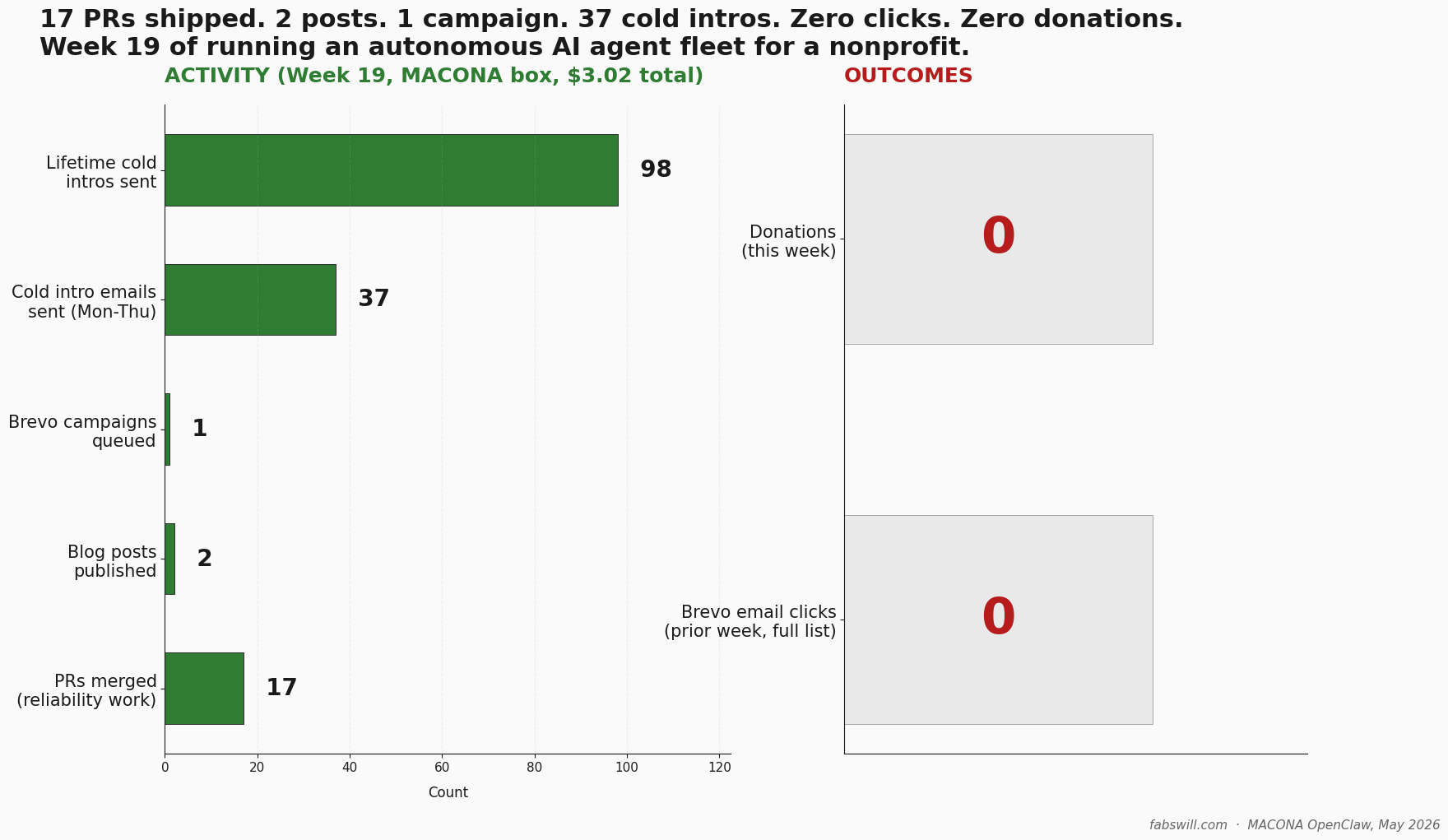
Two-panel chart: left shows 17 PRs, 2 blog posts, 1 campaign, 37 cold intros, 98 lifetime intros shipped in green; right shows zero human clicks and zero donations in red

The AI Agent Fleet Works. The Trust Funnel Does Not.

TL;DR I volunteer with MACONA, a 501(c)(3) nonprofit that ships food, medicine, feminine hygiene products, donated computers, and clothing to communities and schools in West Africa. For a few few monthis now I have run a small autonomous AI agent fleet for the organization: five named agents, cron-driven, running through OpenClaw on a simple Windows box. Week 19 (I track progress via week numbers for me and my Agents) looked like a win on every internal activity metric: 17 reliability PRs merged, 2 awareness-day blog posts published, 1 Brevo campaign queued, and 37 cold introduction emails sent. ...

May 11, 2026 · 14 min · Fabian Williams